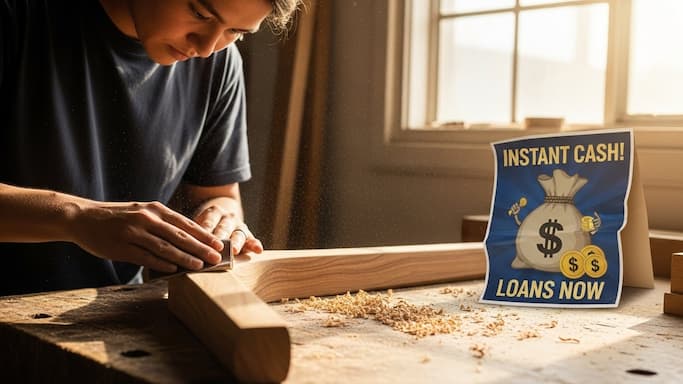
Remember that feeling? You see an ad, a post, or a video promising the secret to making $10,000 a month in just 30 days, working only an hour a day. A little voice whispers, “What if it’s real?” For a split second, the fantasy of instant wealth is intoxicating. It’s the scratch-off lottery ticket for the digital age. But recently, you’ve probably noticed something different. That whisper is getting quieter. Those schemes are starting to look less like a golden ticket and more like a rerun of a bad movie.
There’s a shift happening. Fewer people are chasing the get-rich-quick fantasy, and it’s not because we suddenly don’t want financial freedom—we want it more than ever. It’s because we’ve finally wised up. We’re trading the shaky, sugar-high promise of overnight riches for the steady, solid satisfaction of building something real. We’re choosing a marathon over a magic trick. Let’s talk about why the lure of the quick buck is fading and what the smarter, more resilient mindset replacing it actually looks like.
The Hangover: We’ve Been Burned One Too Many Times
Let’s call this what it is: collective burnout. For over a decade, the digital landscape has been a wild west of promises. From questionable crypto pumps to multi-level marketing schemes wrapped in empowerment language to countless “automated system” courses, a whole generation has been the target. And here’s the thing—many people tried. They bought the course, signed up under a friend, or spent late nights trying to crack a “system.”
The result? A massive case of financial disillusionment. The promised pot of gold turned out to be a pile of complicated tasks, awkward social media posts, and a drained bank account. This wasn’t a failure of effort; it was a failure of the promise itself. The market, in a sense, has self-corrected. We’ve developed a powerful, earned immunity. When you see a “secret method” ad now, your brain doesn’t just see opportunity—it sees a pattern. It remembers the last time. That skepticism isn’t cynicism; it’s hard-won wisdom.
The New Heroes: Witnessing Real, Boring Success
Social media used to be the primary showcase for get-rich-quick culture. Now, ironically, it’s helping dismantle it. We’re following different people. Instead of the guru on a rented Lamborghini, we’re drawn to the creator who transparently shows their five-year journey of growing a newsletter. We watch the small business owner post about her messy, exhausting, and rewarding first year. We listen to the freelancer talk about how they methodically raised their rates over three years.
This exposure to real, slow-building success stories is transformative. It reframes the entire picture. You see the late nights, the mistakes, the gradual progress, the sustained effort. This “slow success” looks achievable. More importantly, it looks durable. It doesn’t vanish when an algorithm changes or a trend dies. This visibility makes the flashy, too-good-to-be-true promise feel hollow by comparison. We’ve traded the highlight reel for the documentary, and we find it infinitely more compelling and credible.
The Rise of the “Skilled Wealth” Mindset
So, if people are turning away from magic bullets, what are they turning toward? They’re embracing what I call the “skilled wealth” mindset. This is the core of the shift. It’s the understanding that the most reliable, defensible form of wealth in the modern economy comes from cultivated skill, not from a secret loophole.
Think of it like building a house. A get-rich-quick scheme is like someone offering you a fully furnished mansion for $100 and a handshake—it’s clearly a scam, and if by some miracle you get the keys, the whole thing will collapse in the first storm. The skilled-wealth approach is about learning carpentry, masonry, and plumbing. You buy quality materials. You pour a deep foundation. You build one sturdy, beautiful room at a time. It takes longer. It requires sweat and learning. But you end up with an asset you understand, you can repair, and you can expand. No one can take it from you because you built it.
This mindset values things like:
-
A Personal Portfolio: Tangible proof of your ability, like published articles, a well-designed website, or a body of client work.
-
A Valuable Network: Real relationships with peers, mentors, and potential collaborators, not just a downline of distributors.
-
Deepened Expertise: Becoming genuinely knowledgeable in a specific area, making you the go-to person for a solution.
-
Financial Fundamentals: Understanding budgeting, saving, and investing, so that the money you do earn is protected and grown.
This is a wealth that compounds. Your skills get better, your reputation grows, your network strengthens, and your opportunities expand. It’s not a scheme; it’s a flywheel.
The Economy is a Truth-Teller
Let’s also be practical. The economic vibe of the last few years has been a masterclass in volatility. We’ve seen layoffs, market swings, and inflation. This environment acts like a stress test for financial strategies. Flimsy, opportunistic schemes snap under pressure. They have no foundation. In contrast, a person with a valuable skill, a strong professional reputation, and a diversified way of applying their talent (like a job and a side hustle and an investment account) is inherently more resilient.
People are intuitively seeking stability. They want an income stream that can’t be canceled by a platform or disappear with a trend. They want something they own and control. Building a skill-based business or career path provides that anchor. It’s less about striking it rich and more about becoming shock-proof.
What This Smarter Path Actually Looks Like
This isn’t about giving up on ambition. It’s about redirecting it. So, what are people actually doing instead of chasing schemes?
They are niching down and going deep. Instead of trying to sell a generic product to everyone, they’re becoming the expert solution for a specific group—like a copywriter for tech startups, a social media manager for sustainable beauty brands, or a coach for new managers in remote companies.
They are building in public. They’re sharing their learning process, their failures, and their small wins. This builds trust, attracts a like-minded audience, and turns their journey into an asset.
They are prioritizing value exchange. Their focus is on creating genuine value—a useful service, a helpful product, insightful content—and trusting that fair compensation follows. This is the opposite of the extractive “fool someone for a sale” mentality of schemes.
They are investing in real education. This means buying a course on a specific software, hiring a coach to improve a business skill, or dedicating time to read and research—not to find a secret, but to master a craft.
The get-rich-quick dream is fading because we’ve collectively matured. We’re no longer satisfied with the appearance of wealth; we’re committed to the architecture of it. We want the confidence that comes from knowing how we built what we have. We want the freedom that is rooted in capability, not luck.
The promise of “quick” will always have a faint whisper. But now, there’s a much louder, clearer, and more compelling voice. It’s the voice that says, “You are capable of building something meaningful. Let’s get to work.” And more people are choosing, every single day, to listen to that one instead. The slow, steady path isn’t just safer—it’s finally getting the recognition it deserves as the truly rewarding one.