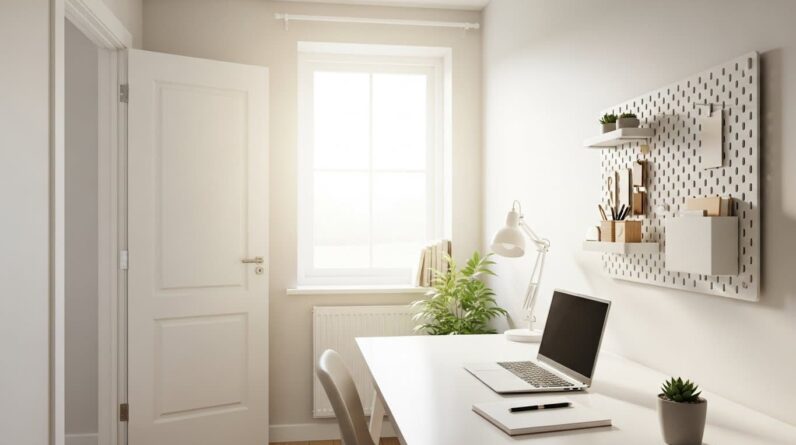
Let’s talk about that extra room, that finished basement, or that garage that’s currently doing nothing but collecting dust and boxes of holiday decorations. Right now, it’s just unused square footage. But what if I told you it’s actually a parked revenue stream? You’re literally walking past money every single day. The idea of making income from your home isn’t new, but the ways you can do it in today’s economy have exploded beyond just taking on a roommate. Maybe you’ve thought about it, but the logistics seem overwhelming. Renting to a stranger feels intrusive, and the thought of starting a massive home-based business is exhausting. The good news is that you don’t have to do any of that. You can start small, stay in control, and use that free space to build something that fits your life perfectly. It’s not about giving up your home; it’s about putting a specific, underused part of it to work.
Shifting Your Mindset: From “Spare Room” to “Asset”
The first step isn’t cleaning out the closet—it’s changing how you see the space. Stop thinking of it as just a room. Start thinking of it as a flexible commercial asset. This shift is powerful because it moves you from a place of scarcity (“I need to fill this”) to a place of strategy (“What can this space best provide?”). An asset generates value. Your job is to match what your space can uniquely offer with what people in your community actually need and are willing to pay for. The goal isn’t to create a 24/7 operation that disrupts your life. The goal is to create a system where your space works for you, on your schedule, with clear boundaries. This is the core of turning free space at home into real money.
The Modern Home-Income Playbook: Four Smart Paths
Forget the complicated business plans. Let’s break this down into four clear, actionable paths you can take, depending on your space, your comfort level, and how hands-on you want to be.
Path 1: The Storage Solution (The Hands-Off Approach)
This is the simplest place to start. People in your neighborhood are drowning in stuff—seasonal gear, business inventory, inherited furniture they’re not ready to deal with. They need clean, secure, and accessible storage, but traditional storage units are expensive, inconvenient, and often feel sketchy.
-
The Real-Life Model: Offer “Neighborly Storage.” That empty 10’x10′ basement room or garage bay can become a premium storage spot. You’re not competing with the big, impersonal storage facility on the highway; you’re offering something better: proximity, security, and a personal touch. Use a platform like Neighbor.com to handle listings, payments, and insurance, which minimizes your risk and effort.
-
Why It Works in 2025: You monetize inert space with almost zero daily management. It’s the closest thing to passive income you’ll find. You set the rules for access (e.g., by appointment only) and what can be stored. It’s perfect for the person who wants minimal interaction and a predictable monthly check.
Path 2: The Creative Studio (For Makers & Hobbyists)
This is for you if your free space has good light, a solid door, and the potential for a little creative mess. If you’re a crafter, painter, woodworker, or musician, you already know the value of a dedicated space. But what if your studio could pay for itself?
-
The Real-Life Model: Become a “Studio Host.” You rent out your creative space by the hour or half-day to other local makers who don’t have a dedicated workspace. Think of the potter who needs to fire a kiln once a week, the jewelry maker who needs a clean bench for soldering, or the voice-over artist who needs a sound-treated room to record. You can list on peer-to-space sites like Peerspace or Splacer.
-
Why It Works in 2025: The “gig economy for space” is booming. You’re providing professional-grade infrastructure. The key is to equip it well for a specific niche (great lighting for photographers, sturdy tables for makers, excellent acoustics for musicians) and charge accordingly. Your hobby space now subsidizes your own creative pursuits.
Path 3: The Focus Pod (The Remote Work Niche)
The world is full of remote workers and freelancers who are sick of their kitchen table or the noisy coffee shop. They crave a quiet, professional, distraction-free environment for deep work, client calls, or just a change of scenery.
-
The Real-Life Model: Create a “Focus Pod.” Transform that spare bedroom into a serene, booked-by-the-day office. Furnish it with a great desk, an ergonomic chair, fast Wi-Fi, a quality webcam, and a ring light. Offer amenities like a coffee station, a whiteboard, and super-fast internet. Market it to local consultants, writers, therapists doing telehealth, and startup founders.
-
Why It Works in 2025: Hybrid work is permanent. People will pay a premium for productivity. This is higher-touch than storage but can command a much higher daily rate. You’re selling peace, quiet, and professional results.
Path 4: The Experience Host (For the Social & Hospitality-Driven)
If you love people and your space has unique charm—a beautiful backyard, a killer home theater, a gourmet kitchen—this is your path. You’re not offering a place to sleep; you’re offering a place to gather.
-
The Real-Life Model: Host “Micro-Events.” Rent your space for small, intimate gatherings. This could be a backyard for a family reunion picnic, a dining room for a private chef’s dinner party, a living room for a book club meeting, or a garage turned game room for a fantasy football draft. List on sites like Gatherings or even Airbnb Experiences.
-
Why It Works in 2025: People crave authentic, local experiences over generic venues. You provide the warm, unique backdrop. This path requires more coordination and cleaning, but it’s also the most social and can be the most fun.
Your Launch Checklist: From Idea to First Dollar in 2 Weeks
Thinking is great, but action pays. Here’s your no-excuses plan to launch in under 14 days.
Week 1: The Strategy Phase
Pick one path from above. Just one. Now, get specific. If it’s storage, measure the space exactly. If it’s a studio, define what equipment makes it special. Then, do your “neighborhood recon.” Search the apps mentioned (Neighbor, Peerspace, Airbnb) to see what similar spaces in your area are charging. This isn’t about copying; it’s about understanding the market. Finally, name your offering. “Downtown Craftsman Garage Storage” is better than “my garage.”
Week 2: The Launch Phase
This is about preparation and going live. First, safety and rules. What’s your insurance situation? (A quick call to your agent can clarify). Draft a simple one-page agreement outlining rules, access, and liability. Next, create your “listing.” This means taking 10-15 fantastic, well-lit photos of the clean, empty space. Write clear, friendly copy that sells the benefit: “A quiet, sunlit room to power through your workday,” not “bedroom with a desk.” Then, set your price slightly below the local average to attract your first few bookings and reviews. Finally, hit “publish” on your chosen platform. Your first listing is a learning experiment, not a lifetime commitment.
The One Rule You Cannot Break: Protect Your Peace
Making money at home only works if it works for your home life. Your primary residence cannot feel like a 24/7 hotel or warehouse. This is non-negotiable. Set ironclad boundaries from day one. Define your availability in hours or days. Use a separate phone number (like a Google Voice number) for all business communication. Physically separate the income space from your living space as much as possible—a lock on the door is a great investment. Schedule your “hosting hours” just like you would a job, and then be off-duty. The moment it starts to feel like an invasion, you need to reassess your rules. This project should reduce your financial stress, not create new personal stress.
Stop Storing Boxes, Start Producing Checks
That free space in your home isn’t a void. It’s an opportunity waiting for a plan. You don’t need a massive overhaul or a huge upfront investment. You need clarity, a bit of courage, and a platform to connect with people who have a need you can fill. The simplest next step is this: walk into that spare room, garage, or basement right now. Look at it not as a chore, but as a blank canvas. What could it become? A vault for a neighbor’s treasures? A launchpad for a local artist’s next project? A sanctuary for a remote worker’s big idea? Choose one path, follow the two-week launch plan, and put your asset to work. Your first booking—and your first check—is closer than you think.