You’ve got a new website, a fresh idea, and a drive to get it in front of people. But the moment you step into the world of online marketing, you’re hit with a classic fork in the road. On one path, you see the promised land of “free” traffic from Google, known as SEO (Search Engine Optimization). On the other, you have the fast lane of paid ads, where you can get clicks almost instantly. It’s a debate as old as the internet itself: SEO vs. paid ads. If you’re a beginner, this isn’t just a technical choice; it’s a foundational decision for your business. It’s about how you spend your two most precious resources: your time and your money. Let’s break this down without the hype, so you can decide where to invest first.
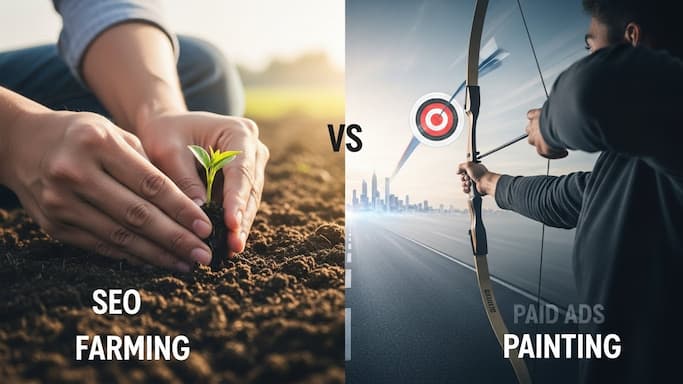
The Core Difference: Farming vs. Hunting
Think of SEO like farming and paid ads like hunting. SEO is a long-term investment. You till the soil (improve your site), plant seeds (create helpful content), and patiently nurture your crops (build authority and links). You’re building an asset that, over months, starts yielding a sustainable harvest of organic traffic. You own that garden. Paid ads, however, are like going hunting. You load your rifle (set up an ad campaign), pay for a hunting license (your ad budget), and you can get meat (traffic) that very day. But the moment you stop paying for the license, the hunting stops. The traffic vanishes. As a beginner, you need to ask yourself: Do I need to eat today, or am I building a homestead for the future?
Diving Deep into the SEO Path
Choosing SEO means committing to a marathon, not a sprint. It’s about playing the long game to build a stable, owned asset.
How SEO Actually Works for a New Site
At its heart, SEO is about answering people’s questions better than anyone else. When you type a query into Google, its algorithm is on a mission to find the most helpful, authoritative, and user-friendly result. Your job is to make your page that result. This involves a few key pillars: creating in-depth, valuable content (on-page SEO), ensuring your site is technically sound and fast (technical SEO), and getting other reputable sites to link back to you (off-page SEO). For a beginner, the focus should be overwhelmingly on creating outstanding content that serves a specific audience.
The Real Timeline and Effort
Here’s the hard truth that many gurus gloss over: SEO takes time. For a brand-new website, you’re looking at a “sandbox” period of 3 to 6 months before you might see any meaningful traffic for moderately competitive terms. Your first few months will feel like you’re publishing into a void. The effort is immense and continuous. It’s not just writing one blog post; it’s about understanding keyword intent, optimizing meta tags, improving page speed, and learning the basics of earning backlinks. The workload is front-loaded and requires consistent effort.
The Unbeatable Advantages of SEO
Why would anyone choose such a slow path? Because the payoff is transformative. The traffic you earn is essentially free. You don’t pay per click. This makes your cost of customer acquisition drop dramatically over time. Secondly, SEO traffic is often high-intent. Someone searching “how to fix a leaking kitchen faucet” is actively looking for a solution, making them a prime lead. Most importantly, you are building an asset. A website that ranks is a business asset with real value. It builds brand credibility and trust in a way that ads often struggle to match.
Navigating the Paid Ads Highway
Paid advertising—primarily through platforms like Google Ads or Meta—is the digital equivalent of putting a billboard on a busy highway. You pay for the placement and the eyeballs.
The Mechanics of Instant Traffic
The process is straightforward. You create an ad, choose your target audience with incredible precision (by demographics, interests, search terms, etc.), set a budget, and bid for ad space. Within hours, you can have traffic flowing to a specific landing page. It’s a direct line from a user’s eyeballs to your offer. This speed is its superpower, especially for testing. Want to know if people will buy your new t-shirt design? Run a small ad campaign to a product page. The feedback is immediate and measured in hard data.
The Costs and Risks You Can’t Ignore
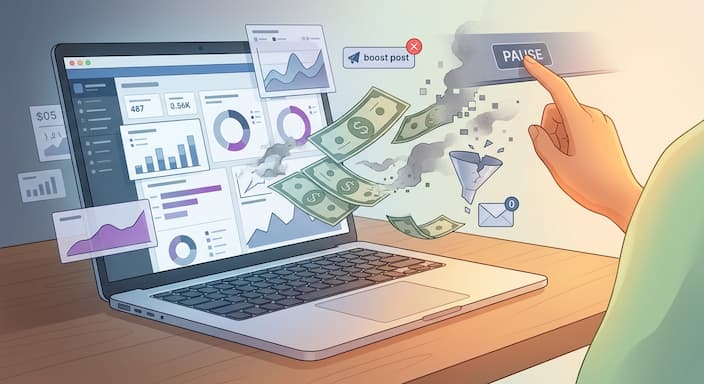
The primary con of paid ads is the cost. This is a pay-to-play channel. Your traffic stops the moment your budget runs out. There’s no residual asset. For competitive keywords, costs-per-click (CPC) can be staggeringly high, quickly draining a beginner’s budget with little to show for it if the campaign isn’t optimized. There’s also a steep learning curve to avoid wasting money. Understanding bidding strategies, quality score, ad relevance, and conversion tracking is crucial. Without this knowledge, you can burn cash fast.
Where Paid Ads Truly Shine
Despite the costs, ads are unparalleled for specific goals. They are the ultimate tool for launching a new product, promoting a limited-time sale, or targeting a specific, narrow audience that’s hard to reach via SEO. They provide immediate data on what messaging works. Think of ads as your market research lab. The insights you gain from what ads and landing pages convert can then inform your long-term SEO content strategy.
So, Which Is Better for You, The Beginner?
This isn’t a one-size-fits-all answer. It depends entirely on your specific situation. Let’s frame it with two common scenarios.
Scenario 1: The Bootstrapped Solopreneur with Patience
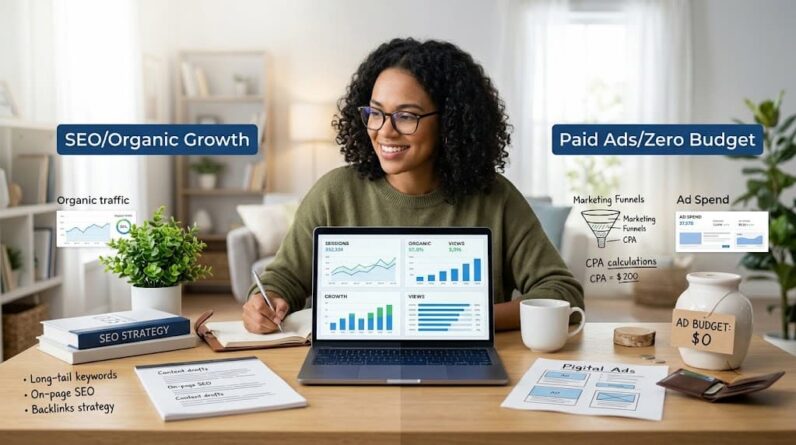
You’re starting a niche blog about sustainable gardening or a local service business like HVAC repair. Your budget is tight, but you have time and a willingness to learn. Your primary goal is to build a lasting, sustainable business. For you, SEO should be your primary focus from Day One. Start building your content foundation now. The traffic will be slow, but the asset you build in 12-18 months could be the core of your business. You can supplement with very small, hyper-local ad tests later to learn, but your main investment is sweat equity.
Scenario 2: The E-commerce Start or Product Launch with Some Capital
You’ve created a new physical product or have an online store. You have a modest marketing budget (say, a few thousand dollars). You need to validate demand and generate sales quickly to fund your operations. For you, a hybrid approach is critical. Use paid ads (like Facebook/Instagram for broad reach or Google Shopping for product searches) to drive immediate traffic and sales. This validates your product and generates cash flow. Simultaneously, but with less immediate pressure, start an SEO strategy. Create blog content that answers questions related to your product (“how to style a minimalist watch,” “benefits of organic cotton t-shirts”). This builds your long-term, free traffic channel while ads keep the lights on.
Your Smart Beginner’s Game Plan
Trying to choose? Here is a practical, actionable plan to get moving without paralysis.
First, understand your own resources. Honestly assess your budget and your tolerance for delayed results. If seeing zero traffic for months will crush your morale, factor that in. Next, claim your foundational assets. Whether you choose SEO, ads, or both, you must own your website and set up basic analytics (like Google Analytics 4). This is your home base. Then, start with “low-hanging fruit” SEO. Do simple, free technical checks. Ensure your site loads quickly on mobile and is secure (HTTPS). Write one fantastic, in-depth “cornerstone” article that truly helps your target customer. Finally, run a tiny, controlled ad experiment. Allocate a small, fixed budget ($50-$100) for a short campaign. Don’t aim for sales; aim for learning. See what ad copy gets clicks. This demystifies the ad platform and gives you valuable insight.
Your journey doesn’t have to be one or the other forever. The savviest marketers use them as a powerful tandem. Use paid ads to quickly discover what messaging and offers resonate with your audience. Then, use those insights to create SEO-optimized content that will attract that same audience for free, year after year. Let your ads fund and inform your SEO, and let your SEO eventually reduce your reliance on ads. That’s how you build a resilient online business. Stop debating and start doing. Pick one channel to focus on for the next 90 days, execute consistently, and learn. That action alone will put you ahead of 90% of beginners who never move past the theory.