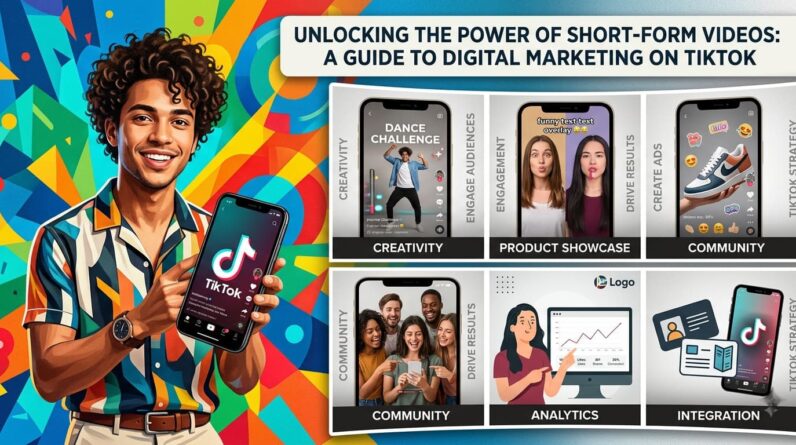
Social media marketing has changed dramatically over the past few years. Audiences are spending less time scrolling through long-form content and more time consuming quick, entertaining, informative, and highly engaging videos.
This shift has created an enormous opportunity for businesses, creators, freelancers, affiliate marketers, and entrepreneurs.
Short-form video allows you to communicate an idea in seconds rather than minutes. A well-made video can introduce a brand, answer a question, demonstrate a product, tell a story, or encourage an action before the viewer even realizes they’ve been marketed to.
Among the platforms that helped accelerate this transformation, TikTok has become particularly influential. Its highly visual, recommendation-driven experience allows creators and businesses to reach people beyond their existing followers.
But success on TikTok isn’t simply about jumping on every trend.
Effective short-form marketing requires a combination of creativity, consistency, audience understanding, storytelling, testing, and measurement.
In this comprehensive guide, we’ll explore how businesses and marketers can use TikTok and short-form videos as part of a broader digital marketing strategy. We’ll cover content creation, audience engagement, advertising, influencer collaborations, analytics, optimization, common mistakes, and practical strategies for building a sustainable short-form video presence.
The Rise of TikTok and Short-Form Videos
Short-form video has become one of the most influential formats in modern digital marketing.
People can consume a video while waiting for a bus, taking a short break, eating lunch, or simply scrolling through their phones at home. This accessibility makes short-form content particularly powerful.
Short-Form Video Content
Short-form videos are typically designed to communicate an idea quickly.
They can include:
- Tutorials
- Product demonstrations
- Behind-the-scenes videos
- Educational tips
- Comedy
- Customer stories
- Industry insights
- Interviews
- Reviews
- Lists and rankings
- Frequently asked questions
- Before-and-after demonstrations
- Inspirational content
The strongest videos don’t necessarily have the biggest production budgets.
In many cases, simple videos recorded with a smartphone can outperform highly polished productions because they feel more natural and native to the platform.
The goal isn’t necessarily to make every video look like a television commercial.
The goal is to make people stop scrolling.
TikTok’s Role in Digital Marketing
TikTok has become an important platform for discovering entertainment, information, trends, creators, and brands.
One of its defining characteristics is its recommendation-driven content experience.
A creator doesn’t necessarily need millions of followers for a video to reach a large audience. A strong piece of content can potentially be recommended to people who have never encountered the creator before.
This creates an interesting opportunity for smaller businesses and emerging creators.
Instead of relying exclusively on an existing audience, they can focus on producing content that earns attention organically.
The Evolution of Short-Form Video Trends
Short-form video trends change quickly.
One month, a particular editing style may be everywhere. The next month, audiences may move toward storytelling, educational content, commentary, or a completely different format.
This constant evolution creates both opportunities and challenges.
Following trends can help your content feel current, but copying every trend isn’t a strategy.
The best marketers learn to recognize trends while adapting them to their own audience, brand, and message.
Why Short-Form Video Works So Well
Understanding why short-form video works can help you create better content.
It Captures Attention Quickly
Users are constantly exposed to new information.
Your opening seconds therefore matter enormously.
A weak introduction can cause someone to scroll away before they understand what the video is about.
A strong opening creates curiosity and gives viewers a reason to continue watching.
For example:
Weak opening:
“Hi everyone, today we’re going to talk about five ways to improve your website.”
Stronger opening:
“Your website may be losing customers for one simple reason.”
The second approach creates a curiosity gap.
The viewer wants to know what the problem is.
It Is Easy to Consume
A viewer can learn something useful in less than a minute.
That makes short-form video particularly effective for tips, explanations, demonstrations, and quick educational content.
It Encourages Sharing
People often share videos that make them laugh, teach them something, surprise them, or remind them of someone they know.
Creating shareable content can therefore expand your reach beyond your immediate audience.
Defining Your TikTok Marketing Goals
Before creating dozens of videos, determine what you want those videos to accomplish.
Different businesses can have completely different objectives.
Your goals might include:
- Increasing brand awareness
- Generating website traffic
- Building an email list
- Increasing engagement
- Generating leads
- Promoting products
- Growing a community
- Establishing authority
- Driving sales
- Increasing app downloads
- Supporting customer education
Having a clear goal helps determine what type of content you should create.
For example, an educational campaign might focus on answering common questions, while a sales campaign might emphasize demonstrations, testimonials, and calls to action.
Understanding Your Target Audience
Creating content for “everyone” usually results in content that connects deeply with very few people.
Instead, identify the audience you want to reach.
Consider:
- Age range
- Interests
- Problems
- Goals
- Buying behavior
- Preferred content styles
- Questions they frequently ask
- Objections they commonly have
You don’t need to know everything about your audience.
Start with a basic understanding of who you’re trying to help.
Then use your performance data and audience feedback to refine your assumptions.
Engaging With Your Audience on TikTok
Building an audience isn’t simply about publishing videos.
You also need to participate in conversations.
1. Create Valuable Content
Your videos should give viewers a reason to watch.
That reason might be entertainment, education, inspiration, curiosity, or practical value.
A useful framework is to ask:
What does the viewer get in return for their attention?
If the answer isn’t clear, the video may need stronger positioning.
2. Use Relevant Hashtags
Hashtags can help categorize content and make it easier for users to discover related topics.
However, adding dozens of unrelated hashtags isn’t a substitute for good content.
Use hashtags that genuinely relate to your topic and audience.
Focus on relevance rather than simply chasing the largest possible hashtag.
3. Collaborate With Creators
Creators can help businesses reach audiences that may be difficult to reach through traditional marketing.
A good collaboration isn’t simply about finding someone with a large follower count.
Consider:
- Audience relevance
- Engagement
- Content quality
- Credibility
- Communication style
- Brand compatibility
A smaller creator with a highly relevant audience can sometimes be more valuable than a much larger creator whose audience has little interest in your business.
4. Run Challenges and Interactive Campaigns
Interactive campaigns can encourage viewers to participate rather than simply watch.
You could invite followers to:
- Answer a question
- Share their experience
- Submit their own video
- Try a challenge
- Complete a tutorial
- Vote between options
- Tell you what they want to see next
Participation can turn passive viewers into active members of your community.
5. Use TikTok’s Interactive Features
Features such as Duet and other response-oriented formats can create opportunities for conversation and collaboration.
Rather than always creating content in isolation, use platform features that allow you to respond to relevant conversations.
This can make your account feel more active and connected.
Creating Effective Short-Form Videos
Creating a good video doesn’t necessarily require expensive equipment.
A smartphone, decent lighting, clear audio, and thoughtful editing can be enough to get started.
Start With a Strong Hook
The hook is the opening idea that encourages someone to continue watching.
Examples include:
Curiosity hook:
“Most beginners make this mistake.”
Problem hook:
“If your videos aren’t getting views, check this first.”
Result hook:
“Here’s how I turned one idea into five videos.”
Question hook:
“Are you making this mistake with your content?”
Contrarian hook:
“You don’t need expensive equipment to make better videos.”
The hook should match the actual content.
Don’t promise something the video doesn’t deliver.
Keep One Main Idea Per Video
Trying to explain ten different concepts in a 30-second video can make the content confusing.
Instead, focus on one central idea.
If you have five tips, consider creating five separate videos.
This gives you more content while making each individual video easier to understand.
Use Captions
Many people consume social media content without sound.
Clear captions can help viewers understand your message even when audio isn’t available.
Captions can also reinforce important points and improve accessibility.
Use Visual Changes
Short-form videos can become visually repetitive if nothing changes for an extended period.
Depending on the style of your content, you can introduce:
- Camera angle changes
- B-roll
- Text overlays
- Screen recordings
- Images
- Demonstrations
- Graphics
- Zooms
- Different locations
The goal isn’t to add visual effects simply for the sake of effects.
Every visual change should help maintain attention or explain the subject.
Creating Effective Ad Campaigns on TikTok
Organic content and paid advertising can complement each other.
Organic content helps you understand what your audience responds to, while advertising can provide additional distribution for selected campaigns.
1. Native Advertising
Native advertising works best when the content feels natural to the platform.
Instead of creating an advertisement that looks completely different from everything else users consume, consider using the visual language of short-form content.
This doesn’t mean hiding the fact that something is an advertisement.
Transparency remains important.
2. In-Feed Advertising
In-feed ads appear within the user’s content experience.
A successful video ad should quickly communicate:
- What the video is about
- Why the viewer should care
- What problem is being addressed
- What action the viewer should take
Don’t make viewers wait until the final seconds to understand the purpose of the advertisement.
3. High-Visibility Formats
Certain advertising formats are designed to provide greater visibility.
These can be useful for major launches, campaigns, announcements, or awareness initiatives.
However, higher visibility doesn’t automatically guarantee better results.
The creative still needs to capture attention.
4. Branded Creative
Businesses can use branded visual elements and creative assets to make campaigns more recognizable.
The key is maintaining a balance.
Too much branding can make content feel like an advertisement immediately, while too little branding can make it difficult for viewers to remember the business.
5. Tracking and Analytics
Never judge an advertising campaign solely by the number of views.
Look at metrics such as:
- Video views
- Watch time
- Completion rate
- Click-through rate
- Engagement
- Conversion rate
- Cost per result
- Return on advertising spend
The most important metric depends on the campaign objective.
Best Practices for Short-Form Videos
1. Keep It Focused
Short doesn’t automatically mean better.
A 15-second video isn’t useful if it rushes through the explanation.
Likewise, a 60-second video isn’t bad simply because it is longer.
The correct length is the amount of time necessary to deliver the idea without unnecessary material.
2. Be Authentic
People can often recognize overly scripted or artificial content.
You don’t need to pretend to be someone else to succeed.
Let your personality come through.
If your brand is professional, remain professional.
If your brand is playful, let that personality appear in your videos.
Authenticity should still be intentional.
3. Tell Stories
Storytelling can make information easier to remember.
Instead of saying:
“Here are three productivity tips.”
Try:
“I used to waste hours doing this every morning. Here’s what changed.”
The second version creates a narrative.
4. Use Strong Visuals
Short-form video is inherently visual.
Use visuals to demonstrate rather than simply explain whenever possible.
If you’re teaching someone how to perform a task, show them.
If you’re discussing a product, demonstrate it.
If you’re explaining data, consider using simple graphics.
5. Create Consistently
Consistency gives your audience more opportunities to discover your content.
However, consistency doesn’t mean you have to publish five times a day.
A realistic schedule that you can maintain is usually better than an aggressive schedule that leads to burnout.
Developing a Short-Form Content Strategy
One of the easiest ways to become overwhelmed is to decide what to post every single day.
Instead, develop content categories.
For example, a business could use five content pillars:
Educational Content
Teach your audience something useful.
Entertainment
Create content designed primarily to make people laugh, smile, or feel something.
Behind the Scenes
Show how your business, products, services, or creative process works.
Social Proof
Share customer stories, testimonials, results, or case studies where appropriate and truthful.
Promotional Content
Explain what you offer and provide a clear next step.
This gives you a framework for generating ideas without making every video feel like a sales pitch.
Turning One Idea Into Multiple Videos
One of the biggest advantages of short-form content is that a single idea can become multiple pieces of content.
Imagine you publish an article called:
“10 Ways to Improve Your Website.”
You could turn that article into:
- One video covering the entire topic
- Ten individual tip videos
- A common mistakes video
- A before-and-after example
- A myth-busting video
- A checklist video
- A beginner’s guide
- A response to a common question
- A case study
- A follow-up video
This approach reduces the pressure to constantly invent completely new ideas.
Using User-Generated Content
User-generated content can be extremely valuable because it allows your audience to participate in your marketing.
You could encourage customers or followers to:
- Share experiences
- Demonstrate how they use something
- Answer questions
- Participate in challenges
- Submit testimonials
- Respond to prompts
Always obtain appropriate permission before republishing someone’s content, and clearly identify sponsored or incentivized content where required.
Influencer and Creator Marketing
Influencer marketing isn’t limited to celebrities.
There are creators in almost every niche.
The most important consideration is audience relevance.
For example, a small creator specializing in home improvement may be much more valuable to a home-improvement business than a general entertainment account with a significantly larger following.
When evaluating creators, look at:
- Audience demographics
- Engagement quality
- Content consistency
- Comment activity
- Previous partnerships
- Brand fit
- Audience trust
Avoid choosing creators based exclusively on follower numbers.
SEO and Discoverability for Short-Form Video
Short-form video isn’t separate from search marketing.
People increasingly use social platforms to discover answers, products, businesses, restaurants, tutorials, and recommendations.
That means your content should clearly communicate its subject.
Use relevant keywords naturally in:
- Spoken dialogue
- On-screen text
- Captions
- Descriptions
- Titles where applicable
- Hashtags
For example, instead of creating a vague video called:
“You Need to Know This!”
A more descriptive approach could be:
“3 Beginner SEO Mistakes That Hurt Website Traffic.”
The second title immediately tells viewers what they can expect.
Measuring Your Results
One of the biggest advantages of digital marketing is the ability to measure performance.
Don’t simply ask:
“Did this video go viral?”
Ask better questions.
Did people watch?
Look at views and watch behavior.
Did people stay?
Examine retention and completion patterns.
Did people engage?
Look at comments, shares, likes, saves, and other meaningful interactions.
Did people take action?
If your goal is traffic or sales, examine clicks and conversions.
What can you learn?
A video that doesn’t perform well isn’t necessarily useless.
It may reveal something about your hook, topic, presentation, timing, audience, or positioning.
TikTok Analytics and Performance Optimization
Analytics should influence your future content decisions.
Suppose you discover that:
- Tutorials receive high completion rates.
- Product announcements receive low engagement.
- Behind-the-scenes videos receive many comments.
- Shorter videos receive more shares.
That information gives you a direction for future content.
Instead of guessing what your audience wants, use actual performance data to guide your decisions.
Test One Variable at a Time
If a video performs poorly, don’t immediately change everything.
Experiment with:
- A different hook
- A different video length
- A different thumbnail or opening frame
- Different presentation styles
- Different topics
- Different calls to action
Over time, these experiments can reveal patterns.
Common TikTok Marketing Mistakes
Trying to Sell in Every Video
If every video says “buy now,” viewers may quickly lose interest.
Provide value before asking for something.
Copying Trends Without Context
A trend isn’t automatically relevant to your audience.
Use trends when they naturally fit your message.
Making Videos Too Complicated
Short-form content doesn’t need a cinematic production budget.
Clarity is more important than complexity.
Ignoring Comments
Comments can contain questions, objections, ideas, and potential content topics.
Responding to useful comments can also demonstrate that your business is listening.
Buying Followers
Artificially inflating follower counts may create the appearance of growth without creating a genuinely interested audience.
Focus on attracting people who actually care about your subject.
Posting Without Measuring
If you never review your performance, you’re missing one of the biggest advantages of digital marketing.
Treat every video as an opportunity to learn.
Tips and Tricks for Better Short-Form Content
1. Experiment Constantly
Don’t assume you have discovered the perfect formula.
Continue testing new hooks, topics, formats, editing styles, and storytelling approaches.
2. Build a Content Bank
Keep a running list of:
- Questions from customers
- Comments from viewers
- Common mistakes
- Industry news
- Personal experiences
- Frequently asked questions
- Interesting statistics
- Content ideas
- Competitor observations
When it’s time to create a video, you’ll have ideas ready.
3. Record Multiple Videos at Once
Batch production can save considerable time.
Instead of setting up your camera every day, record several related videos during one session.
You can then edit and schedule them later.
4. Repurpose Your Best Content
If a topic performs well, don’t immediately abandon it.
Create another version.
Approach it from a different angle.
Expand the explanation.
Answer a related question.
Turn the comments into a follow-up.
One successful idea can become a content series.
5. Stay Current Without Becoming Obsessed With Trends
Trends can provide opportunities, but your long-term strategy shouldn’t depend entirely on them.
Build content around your expertise and audience first.
Use trends as additional tools.
Building a Simple TikTok Marketing Funnel
Short-form videos can support different stages of the customer journey.
Stage 1: Awareness
Create entertaining or educational videos that introduce your brand to new audiences.
Stage 2: Interest
Provide deeper information that demonstrates your expertise.
Stage 3: Consideration
Use comparisons, demonstrations, case studies, and answers to common objections.
Stage 4: Conversion
Give interested viewers a clear next step.
This could be visiting your website, signing up for an email list, requesting information, or purchasing something.
Stage 5: Retention
Continue creating valuable content for existing customers.
A customer shouldn’t stop hearing from you immediately after making a purchase.
Recommended Tools and Resources
1. Video Editing Tools
Tools such as InShot, Adobe Premiere Pro, iMovie, and other editing applications can help you cut clips, add captions, adjust audio, and create polished videos.
Choose software based on your skill level and workflow rather than assuming the most complicated editor is automatically the best.
2. Design Tools
Graphic design tools can help you create thumbnails, text overlays, promotional graphics, and other visual assets.
3. Analytics Tools
Use the analytics available through your social platforms to understand how your content performs.
Website analytics can also help you understand what happens after someone clicks through from social media.
4. Social Media Management Platforms
Scheduling and management platforms can help businesses organize content across multiple social networks.
These tools can be particularly useful when you’re managing several accounts or working as part of a marketing team.
5. Official Platform Resources
Social platforms regularly change their features, policies, advertising options, and recommendations.
Always consult the platform’s current official documentation when making decisions about advertising requirements, community guidelines, commercial content, and other policies.
Creating a 30-Day Short-Form Video Plan
If you’re ready to begin, you don’t need a complicated strategy.
Try a simple 30-day experiment.
Week 1: Education
Create videos answering common questions in your industry.
Week 2: Storytelling
Share experiences, mistakes, lessons, and behind-the-scenes content.
Week 3: Engagement
Ask questions, respond to comments, and create interactive content.
Week 4: Conversion
Create demonstrations, comparisons, case studies, and clear calls to action.
At the end of the month, review your analytics.
Identify your strongest topics, hooks, formats, and audience responses.
Then use those findings to build your next month’s content.
The Future of Short-Form Video Marketing
Short-form video is likely to remain an important part of digital marketing because it matches the way many people consume information online.
However, the specific trends will continue to change.
New editing styles will emerge.
New creators will become popular.
Platform features will evolve.
Audience preferences will shift.
Successful marketers therefore need to focus on principles rather than chasing individual trends.
Those principles include:
- Understand your audience.
- Create useful content.
- Capture attention quickly.
- Tell compelling stories.
- Experiment frequently.
- Measure performance.
- Learn from your audience.
- Maintain consistency.
- Adapt to changes.
The technology will change.
The fundamental need to earn attention and provide value will not.
Conclusion
TikTok and short-form video have transformed the digital marketing landscape by giving businesses and creators a powerful way to communicate with audiences quickly and creatively.
But simply creating an account and posting random videos isn’t enough.
Successful short-form marketing requires a strategy.
You need to understand who you’re trying to reach, what problems you can solve, what type of content your audience enjoys, and what action you want viewers to take.
Start with simple videos.
You don’t need expensive equipment or a massive production team.
A smartphone, good lighting, clear audio, a strong idea, and consistent effort can provide a solid starting point.
Focus on creating content that educates, entertains, inspires, or solves a genuine problem.
Then measure the results.
If something works, study why it worked.
If something fails, learn from it.
If your audience asks questions, turn those questions into content.
If a topic performs well, explore it further.
And if a trend naturally fits your brand, use it creatively rather than simply copying what everyone else is doing.
Most importantly, remember that short-form video isn’t just about getting views.
Views can create awareness, but meaningful engagement, trust, traffic, leads, and conversions are what ultimately make digital marketing valuable.
Create consistently, experiment intelligently, listen to your audience, and use your analytics to improve. With the right approach, short-form video can become one of the most powerful and flexible components of your digital marketing strategy.