If you’ve ever dreamed of turning something you genuinely enjoy into an online income stream, blogging is still one of the most accessible ways to start.
You don’t need a huge audience. You don’t need expensive equipment. And you certainly don’t need to become an overnight SEO expert.
What you do need is patience, useful content, a clear topic, and a willingness to keep improving.
The biggest mistake beginners make is thinking blogging is about publishing an article and waiting for money to appear. Successful blogging is closer to building a small online business. You create something useful, attract the right people, earn their trust, and eventually give them ways to buy products, services, or resources that genuinely help them.
And the good news? You can start surprisingly cheaply.
A basic blog can often be launched for roughly the cost of a few cups of coffee each month. The bigger investment isn’t money—it’s your time.
This guide walks through how blogging income actually works, what you need to get started, how to avoid wasting money, and how to build something that can grow over the long term.
First, Let’s Set the Right Expectations
Before buying a domain or writing your first article, there’s one important thing to understand:
Blogging is not usually quick money.
You may hear stories about someone making thousands of dollars from a blog within a few months. Those stories exist, but they aren’t the typical experience.
For most beginners, the early stages look much less exciting.
You publish an article.
Ten people visit.
Then twenty.
Then perhaps nobody visits for several days.
You publish another article.
Eventually, Google starts discovering your content. Someone finds one of your articles through search. A visitor joins your email list. Someone clicks an affiliate link. Eventually, you make your first dollar.
That first dollar can feel more exciting than a hundred-dollar paycheck because it proves something important:
Someone you don’t know found something you created and decided it was valuable enough to take action.
That’s the foundation you build on.
A More Realistic Blogging Timeline
A rough progression might look like this:
- Months 0–3: Learning, publishing, experimenting
- Months 3–6: Early search impressions and initial traffic
- Months 6–12: Growing traffic and possible first meaningful income
- Months 12–24: Building authority, repeat traffic, and multiple income streams
- 24+ months: Potentially operating a mature content business
These aren’t guarantees. Some blogs grow much faster, while others take considerably longer.
Your niche, content quality, competition, promotion, monetization strategy, and consistency all matter.
The important lesson is this:
Don’t judge your blog by its first 30 days.
A blog is an asset that can become more valuable as its content library grows.
Step 1: Choose a Niche You Can Stick With
Your niche is the general subject your blog focuses on.
It could be:
- Personal finance
- Home improvement
- Gardening
- Cooking
- Fitness
- Technology
- Freelancing
- Travel
- Parenting
- Pets
- Photography
- Gaming
- Digital marketing
- Productivity
- Hobbies
- DIY projects
But don’t choose a niche simply because somebody told you it’s profitable.
Instead, look for the intersection of three things:
1. Something You Understand or Want to Learn
You don’t necessarily need to be an expert.
You can document your journey, research topics carefully, interview experts, test products, and share what you’ve learned.
However, you should be prepared to produce accurate and genuinely useful information.
2. Something People Care About
A topic needs an audience.
Ask:
- What questions do people repeatedly ask?
- What problems are they trying to solve?
- What products do they buy?
- What information do they search for?
- What frustrations do they have?
A good niche has problems worth solving.
3. Something With Monetization Potential
Traffic is great, but if your goal is income, you also need a business model.
For example:
Gardening blog → affiliate links for tools and supplies → digital gardening planner → sponsored content
WordPress blog → hosting affiliates → plugin affiliates → tutorials → consulting
Cooking blog → advertising → kitchen-product affiliates → recipe ebook
Freelancing blog → software affiliates → templates → courses → services
The best niches aren’t necessarily the ones with the highest search volume.
They’re the ones where useful content can naturally lead to useful products or services.
Step 2: Don’t Try to Cover Everything
One of the easiest ways to make a new blog confusing is to write about everything you find interesting.
Imagine a website containing:
- 3 articles about fitness
- 2 articles about cryptocurrency
- 5 recipes
- 1 article about WordPress
- 4 travel guides
- 2 articles about gardening
There’s nothing inherently wrong with those subjects individually.
The problem is that the site doesn’t give readers—or search engines—a clear understanding of what it’s about.
Instead, start with a content umbrella.
For example:
Broad niche:
Home improvement
Content categories:
- DIY repairs
- Budget renovations
- Tools
- Home organization
- Energy efficiency
Now you have room to create hundreds of articles while still maintaining a recognizable theme.
Step 3: Start Your Blog Without Spending a Fortune
You don’t need a $5,000 website.
You don’t need a custom logo.
You don’t need an expensive developer.
You don’t need twenty premium plugins.
For a beginner, a simple setup is usually better.
Your Basic Blogging Stack
You generally need:
- A domain name
- Web hosting
- WordPress
- A lightweight theme
- A few essential plugins
- An email service
- Analytics and search tools
That’s it.
Domain Name
Your domain is your website address.
Try to choose something:
- Easy to remember
- Easy to spell
- Relevant to your brand
- Short enough to say aloud
- Flexible enough to grow with you
Avoid overly complicated names with multiple hyphens or numbers unless they have a specific branding purpose.
Hosting
You can start with inexpensive shared hosting.
You don’t need a powerful dedicated server when you’re receiving a handful of visitors.
As your traffic grows, you can upgrade.
This is an important principle for blogging:
Don’t pay for tomorrow’s traffic today.
If your blog gets 100 visitors per month, you probably don’t need infrastructure designed for one million visitors.
Start small.
Upgrade when your actual needs justify the expense.
Step 4: Keep Your Website Simple
Beginners often spend weeks choosing themes, colors, logos, animations, sliders, and fancy layouts.
Meanwhile, they have five articles published.
Don’t make that mistake.
Your website needs to accomplish a few basic things:
- Load quickly
- Work well on phones
- Make content easy to read
- Make navigation obvious
- Make it easy to find important pages
- Give visitors a clear next step
A simple website with excellent content will usually outperform a beautiful website with nothing useful to say.
Essential Pages
At minimum, consider creating:
- Home
- About
- Contact
- Privacy Policy
- Terms or Disclaimer where appropriate
Depending on your business model, you may also need affiliate disclosures, cookie notices, advertising disclosures, and other legal pages.
Step 5: Create Content People Actually Want
This is where blogging becomes a business.
Don’t simply ask:
“What do I want to write about?”
Also ask:
“What does my audience need help with?”
That’s a much more powerful question.
Imagine you have a gardening blog.
Instead of writing:
“My Thoughts on Gardening”
you could create:
- How to Start a Vegetable Garden for Beginners
- How Often Should You Water Tomato Plants?
- 10 Easy Vegetables to Grow in Small Spaces
- How to Make Compost at Home
- Raised Beds vs. Containers: Which Is Better?
- How to Fix Yellowing Vegetable Leaves
These articles answer specific questions.
And specific questions often lead to specific search traffic.
Step 6: Build Content Around Search Intent
SEO doesn’t have to be mysterious.
At its simplest, search engine optimization means helping search engines understand your content and making sure your article satisfies what the searcher actually wants.
Consider someone searching:
“best budget laptop for college students”
They probably want recommendations.
An article explaining the history of laptops won’t satisfy that intent.
Instead, they probably want:
- Several options
- Prices
- Features
- Pros and cons
- Who each laptop is best for
- Buying advice
Your article should solve the problem behind the search.
Four Useful Search Intent Categories
Informational:
“What is affiliate marketing?”
How-to:
“How to start affiliate marketing”
Commercial investigation:
“Best affiliate marketing tools”
Transactional:
“Buy affiliate marketing software”
Understanding these differences can dramatically improve your content strategy.
Step 7: Build Content Clusters Instead of Random Articles
One of the most effective ways to organize a blog is through related groups of content.
For example, suppose your main topic is home gardening.
You could create a cornerstone article:
Ultimate Beginner’s Guide to Vegetable Gardening
Then create supporting articles:
- Best Vegetables for Beginners
- How to Prepare Garden Soil
- How Often to Water Vegetables
- Beginner Gardening Tools
- How to Start Seeds Indoors
- Common Vegetable Gardening Mistakes
- How to Deal With Garden Pests
Then connect those articles with internal links.
This creates a network of related content rather than a collection of disconnected posts.
Step 8: Don’t Obsess Over Article Length
There’s a persistent myth that every article needs to be 2,000 or 3,000 words.
That’s not necessarily true.
A 700-word article that completely answers a simple question can be more useful than a 4,000-word article padded with repetition.
Instead of asking:
“How long should this article be?”
ask:
“How much information does the reader need to solve the problem?”
Some topics need 800 words.
Others need 3,000.
Write enough to provide a genuinely complete answer.
Step 9: Use a Simple Publishing Schedule
You don’t need to publish every day.
In fact, publishing daily may be unrealistic for someone with a job, family, or other responsibilities.
A sustainable schedule might be:
Beginner schedule
1 quality article per week
That’s more than 50 articles in a year.
Or:
2 articles per week
That’s more than 100 articles in a year.
That’s a substantial content library.
Consistency beats enthusiasm followed by burnout.
Step 10: Monetize Without Ruining the Reader Experience
This is where many blogs go wrong.
The moment a blogger gets traffic, they think:
“How can I put more advertisements on this page?”
Instead, think:
“How can I make this visitor’s experience better while creating an opportunity to earn?”
That’s a much healthier business model.
1. Affiliate Marketing
Affiliate marketing is one of the easiest monetization methods for content websites.
You recommend a product or service.
Someone clicks your referral link.
If they make a qualifying purchase, you receive a commission.
The best affiliate content doesn’t feel like an advertisement.
It feels like useful advice.
Examples include:
- Product comparisons
- Software reviews
- Buying guides
- Tutorials
- Resource lists
- “Best tools for…” articles
The key is relevance.
Don’t recommend a product simply because it pays a high commission.
Recommend it because it genuinely makes sense for your reader.
2. Digital Products
Digital products can become extremely valuable as your audience grows.
Examples include:
- Ebooks
- Checklists
- Templates
- Spreadsheets
- Printables
- Notion templates
- Design resources
- Courses
- Downloadable guides
The advantage is that you create the product once and can potentially sell it repeatedly.
Even a simple $10 product can become meaningful at scale.
For example:
100 sales × $10 = $1,000
You don’t need millions of visitors.
You need the right audience and a useful product.
3. Display Advertising
Advertising can provide passive revenue once you have enough traffic.
However, don’t expect enormous income from a tiny audience.
A blog receiving a few hundred visitors per month won’t generate life-changing advertising revenue.
That’s okay.
Think of advertising as something that becomes more useful after your traffic grows.
4. Sponsored Content
Once your blog develops authority and an audience, companies may pay to appear in front of your readers.
Possible opportunities include:
- Sponsored articles
- Product reviews
- Newsletter sponsorships
- Brand partnerships
- Sponsored social content
But maintain editorial standards.
A sponsored article that damages your readers’ trust can cost more than the sponsorship is worth.
5. Services
This is an often-overlooked monetization method.
You don’t need 100,000 visitors to make money from a blog.
If your blog demonstrates expertise, you can sell:
- Consulting
- Coaching
- Freelance services
- Web development
- Writing
- Design
- Virtual assistance
- Training
In some niches, one client can be worth more than thousands of advertising visitors.
Step 11: Build an Email List Early
Social media followers are useful.
Search traffic is useful.
But an email list gives you something different:
a direct relationship with your audience.
Someone who willingly gives you their email address is signaling a higher level of interest.
You can offer something useful in exchange:
- Checklist
- Mini guide
- Template
- Resource list
- Free course
- Downloadable planner
Then send genuinely useful emails.
Don’t turn every email into a sales pitch.
Step 12: Traffic Takes More Than SEO
SEO can become one of your most valuable traffic sources, but don’t depend entirely on Google.
Build multiple traffic channels over time.
Search
Create useful content targeting relevant queries.
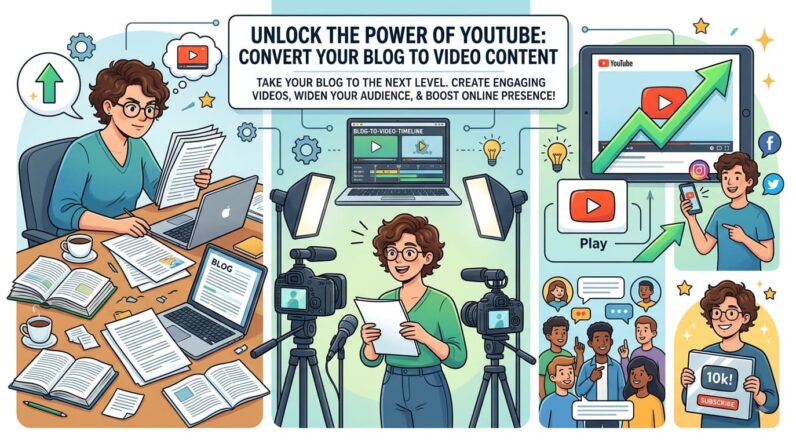
YouTube
Turn tutorials and articles into videos.
Useful for visual niches such as:
- Food
- Home
- DIY
- Travel
- Crafts
- Lifestyle
Social Media
Choose one platform where your audience actually spends time.
Bring previous visitors back to your newest content.
Communities
Participate in relevant communities and answer questions.
The goal isn’t to be everywhere.
It’s to develop one or two reliable traffic channels and gradually expand.
Step 13: Track What Actually Works
Don’t guess.
Use free analytics tools to monitor:
- Visitors
- Popular articles
- Search queries
- Click-through rates
- Affiliate clicks
- Email signups
- Conversion rates
- Traffic sources
After several months, you’ll start seeing patterns.
Perhaps articles about one topic attract dramatically more traffic.
Perhaps another topic generates more affiliate sales.
That’s valuable information.
Follow the evidence.
If something works, create more content around it.
The 80/20 Principle of Blogging
A small portion of your content may eventually generate a large portion of your traffic and revenue.
Imagine you publish 100 articles.
Perhaps:
- 10 generate most of your traffic
- 5 generate most of your affiliate clicks
- 3 generate most of your revenue
Don’t ignore the other articles, but pay close attention to those winners.
Update them.
Improve them.
Add internal links.
Add better examples.
Improve the introduction.
Update outdated information.
Strengthen calls to action.
Your existing content can become one of your biggest growth opportunities.
How Much Should a Beginner Spend?
This is where I strongly recommend restraint.
You can easily spend hundreds or thousands of dollars on:
- Premium themes
- SEO software
- Keyword tools
- AI writing tools
- Plugins
- Courses
- Design services
- Logo packages
- Social media tools
You don’t need most of them when you’re starting.
A Lean First-Year Budget
| Expense | Possible Cost |
|---|---|
| Domain | $10–$20/year |
| Basic hosting | ~$3–$10/month |
| WordPress | Free |
| Basic theme | Free |
| SEO plugin | Free |
| Analytics | Free |
| Search Console | Free |
| Email marketing | Free tier |
| Backup plugin | Free |
| Potential starting cost | Roughly $50–$150/year |
Prices vary by provider and promotions, but the principle is more important than the exact numbers.
Keep your fixed costs low until the blog earns enough to justify upgrades.
The “Don’t Buy It Yet” Rule
Here’s a useful rule for new bloggers:
Don’t buy a tool to solve a problem you don’t have yet.
Don’t buy an expensive email platform when you have 12 subscribers.
Don’t buy enterprise SEO software when you have 20 articles.
Don’t pay for a dedicated server when you have 50 visitors a day.
Don’t purchase a $1,000 course because you’re afraid you’re missing a secret.
Start with inexpensive or free tools.
Upgrade when your blog’s growth creates a genuine need.
This approach protects your cash flow and makes blogging much less stressful.
Common Beginner Mistakes
| Mistake | Why It Hurts | Better Approach |
|---|---|---|
| Expecting overnight income | Creates unrealistic expectations | Think in months and years |
| Choosing a niche only for money | Easy to lose motivation | Choose a topic you can sustain |
| Publishing random topics | Weak topical authority | Build content clusters |
| Obsessing over design | Wastes time | Prioritize content and usability |
| Buying too many tools | Eats your budget | Start with free versions |
| Publishing without research | May attract little traffic | Understand search intent |
| Ignoring email | Loses repeat visitors | Start building a list early |
| Relying on one traffic source | Creates vulnerability | Diversify gradually |
| Giving up after three months | Growth often takes longer | Commit to a longer experiment |
| Publishing low-quality AI content | Little unique value | Add experience, examples, testing, and expertise |
What If Nobody Reads Your First Articles?
This is completely normal.
Your first articles may receive almost no traffic.
Don’t panic.
Instead, use them as practice.
Ask:
- Is the topic actually useful?
- Did I target a specific problem?
- Is the title clear?
- Does the introduction immediately help the reader?
- Is the article better than existing results?
- Did I link to related content?
- Did I promote it anywhere?
- Could I improve the article six months from now?
Blogging is iterative.
Your first 20 articles aren’t necessarily supposed to be masterpieces.
They’re part of your education.
A Better 90-Day Blogging Plan
Instead of trying to build an enormous website immediately, give yourself one focused 90-day project.
Days 1–30: Build the Foundation
Choose:
- Your niche
- Domain
- Hosting
- WordPress setup
- Basic design
- Essential pages
Then publish your first 4–8 useful articles.
Don’t worry about perfection.
Get the system working.
Days 31–60: Build Your Content Library
Publish another 4–8 articles.
Start connecting related posts with internal links.
Set up:
- Search Console
- Analytics
- Email collection
- Basic SEO
Look at which topics are beginning to attract impressions.
Days 61–90: Improve and Expand
Now start analyzing.
Which articles are getting impressions?
Which receive clicks?
Which topics generate engagement?
Which pages have potential but aren’t performing?
Update your best opportunities.
Create additional content around promising topics.
Start experimenting with affiliate offers where they naturally fit.
At the end of 90 days, don’t ask:
“Why am I not rich yet?”
Ask:
“What have I learned about my audience and what should I do more of?”
That’s a much better question.
When Should You Start Monetizing?
You don’t necessarily need to wait until you have thousands of visitors.
You can introduce monetization when it’s genuinely relevant.
For example, if you write:
“How to Build a Home Office on a Budget”
and recommend a desk, chair, monitor, and lighting equipment you genuinely believe are useful, affiliate links may make sense from the beginning.
But don’t turn every paragraph into a sales pitch.
A good rule is:
Help first. Recommend second. Sell last.
If your readers consistently feel helped rather than sold to, you’re building something much more valuable.
What Does Successful Blogging Really Look Like?
It’s easy to imagine successful blogging as sitting on a beach while money arrives automatically.
The reality is more interesting.
Successful bloggers often spend their time:
- Researching topics
- Writing articles
- Updating old content
- Studying analytics
- Testing headlines
- Building email lists
- Creating products
- Networking
- Improving their websites
- Learning what their audience actually wants
Eventually, some processes can become automated.
But the business still needs attention.
Blogging can become an asset, but it doesn’t begin as passive income.
The Long-Term Advantage of Blogging
Here’s why blogging remains attractive despite the work involved.
A useful article can continue attracting visitors long after you publish it.
A video can keep generating views.
An email list can keep growing.
A digital product can keep selling.
An affiliate article can continue producing commissions.
And a collection of hundreds of useful articles can become a valuable digital property.
That’s the compounding effect.
Imagine publishing one genuinely useful article every week.
After:
1 year: ~52 articles
2 years: ~104 articles
3 years: ~156 articles
You now have a substantial library of information working together.
Not every article will succeed.
That’s okay.
You only need some of them to become traffic and revenue generators.
Your Simple Blogging Income Formula
Don’t overcomplicate this.
Think of your blog as a system:
Useful Content → Traffic → Trust → Action → Revenue
Your job is to improve each step.
Better content
Creates more value.
More traffic
Brings more potential readers.
More trust
Makes readers more likely to listen to you.
Better offers
Increase the chance that visitors take useful action.
Better monetization
Turns that attention into sustainable income.
And then you repeat the process.
Final Thoughts: Build Slowly, Spend Carefully, Keep Going
Blogging for income doesn’t require you to gamble thousands of dollars or become an internet celebrity.
You can start small.
You can use free tools.
You can learn as you go.
You can publish one useful article at a time.
And perhaps most importantly, you don’t have to have everything figured out before you begin.
Your first blog won’t be perfect.
Your first article probably won’t be perfect either.
That’s fine.
What matters is building a system you can maintain.
Choose a topic you can stick with. Create genuinely useful content. Learn basic SEO. Build an email list. Experiment with monetization. Watch your numbers. Improve what works.
And keep your expenses under control.
Your beginner roadmap:
- Choose one niche you genuinely care about.
- Start with inexpensive hosting and a simple WordPress setup.
- Publish useful, problem-solving content consistently.
- Learn basic SEO rather than chasing complicated hacks.
- Build an email list from the beginning.
- Experiment with affiliate marketing and other relevant income streams.
- Track what attracts traffic and generates revenue.
- Update your best content instead of constantly starting from scratch.
- Don’t buy expensive tools until you actually need them.
- Give the project at least 12 months before deciding whether it has potential.
The biggest advantage you can give yourself isn’t a fancy theme, expensive software, or a secret SEO strategy.
It’s time and consistency.
Start small. Keep your costs low. Help people first. Let your content library grow.
You may be surprised by what a simple blog can become after you’ve given it enough time to compound.