Let’s cut through the noise for a second. You’re building something on your own. A service, a product, a brand. You’re the CEO, the product developer, the customer service rep, and the janitor. And now, you’re staring down the barrel of “digital marketing.” The landscape looks like a three-ring circus: endless social media platforms screaming for content, SEO experts talking about algorithms in tongues, and ads that promise the world if you just “scale” and “optimize your funnel.”
It’s enough to make you want to close the laptop and just hope clients magically find you. You don’t have a marketing department. You have you. And between actually doing the work that pays the bills and living your life, the idea of “building a personal brand” or “going viral” feels like a full-time job you didn’t apply for.
But here’s the secret they don’t tell solopreneurs: effective marketing isn’t about being everywhere at once. It’s about being strategically, consistently, and authentically in one or two places that matter to your ideal customer. It’s about working smarter with the time and energy you actually have. This isn’t about competing with corporations; it’s about leveraging your greatest asset—your own voice and story—in a way that feels sustainable and, frankly, human.
The Solopreneur Mindset: Depth Over Breadth
Forget the spray-and-pray approach. As a solo act, you cannot afford to waste effort. Your first and most important marketing task is not creating content—it’s gaining clarity.
You must be able to answer this question in simple, plain language: Who do I help, and what specific problem do I solve for them? Not “everyone,” not “small businesses.” Get specific. Are you a bookkeeping wizard for freelance graphic designers? A vegan meal prep coach for new parents? A woodworker creating modern heirloom toys?
This isn’t about limiting yourself; it’s about making your marketing infinitely easier. When you know exactly who you’re talking to, you know where they hang out online, what language they use, and what keeps them up at night. Your messages stop being generic broadcasts and start being meaningful conversations.
Choose Your One “Home Base” Channel
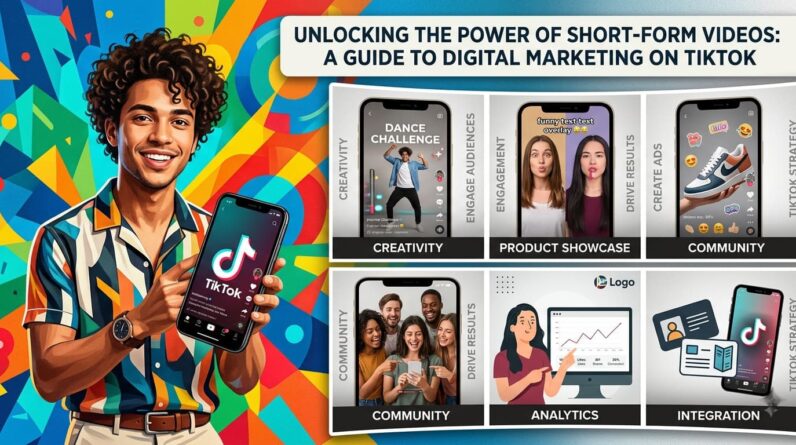
You do not need a TikTok, an Instagram, a YouTube channel, a Twitter account, a LinkedIn profile, and a weekly podcast. Trying to maintain all of them is the fastest path to burnout and inconsistency, which is the killer of all digital marketing efforts.
Instead, pick one primary channel to be your “home base.” This is where you will consistently show up, provide value, and build a community. Choose based on two things: 1) Where your ideal clients naturally spend their time, and 2) Which format feels least like a chore to you.
-
If your work is visual (design, art, crafts, food), Instagram or Pinterest might be your home.
-
If you offer B2B or professional services (coaching, consulting, copywriting), LinkedIn is your powerhouse.
-
If explaining processes or teaching is central to your value, a simple YouTube channel or a weekly email newsletter could be your bedrock.
-
If your strength is in long-form writing and building deep authority, a blog on your website is non-negotiable.
Commit to this one channel for 90 days. Show up there 3-4 times a week, not to sell, but to share, teach, and connect. Consistency in one place beats chaotic posting everywhere.
Content That Converts Without the Cringe
You know you need to create content, but the pressure to be “creative” can be paralyzing. Here’s the solopreneur’s content formula: Document, don’t create.
Your process, your lessons learned, your client successes (with permission), your failures, your tools, and your answers to common questions—this is all gold. You are not a media company producing entertainment; you are an expert sharing your journey. A cabinet maker can document the journey of a single piece from rough wood to finished table. A financial coach can share the one spreadsheet template that changed her clients’ lives. This approach is sustainable because you’re just talking about what you’re already doing.
Every piece of content should have a gentle, helpful call-to-action (CTA) that feels like a natural next step. Not “BUY NOW!” but:
-
“If you found this tip helpful, I dive deeper on this topic in my free guide. Link in bio.”
-
“This strategy works for my clients all the time. If you’re stuck on this, my DMs are open for one question.”
-
“I put together a checklist for this process. Just reply to this email with ‘Checklist’ and I’ll send it right over.”
You’re building a relationship, not jumping straight to a transaction.
The Simple Website: Your 24/7 Sales Rep
Even if your home base is a social platform, you need a website. It doesn’t need to be a masterpiece. It needs to be a clean, clear, and credible “home” that you own. Think of it as your digital business card and brochure, combined.
It must have:
-
A headline that immediately states who you help and how (e.g., “I help overwhelmed coaches book premium clients with a simple email system.”).
-
A brief “about” section that connects your story to your customer’s problem.
-
A clear description of your core offer or service.
-
A few compelling testimonials or case studies.
-
One, unambiguous way to get in touch or book a call.
Your website’s job is to capture the interest you generate elsewhere and convert it into a conversation. Use a simple builder like Carrd, Squarespace, or WordPress. It should take a weekend, not a month.
The Power of a Tiny, Focused Audience
Chasing 10,000 followers is a fool’s errand. A solopreneur can build a thriving business with a genuinely engaged audience of 500 or 1,000 people. This is the concept of “1,000 True Fans.”
Focus on building a community, not just a following. Reply to every comment. Answer DMs. Ask your audience questions. Feature them. When you make it about connection, you build trust. And people buy from those they know, like, and trust. A small, loyal audience will hire you, refer you, and champion you far more effectively than 10,000 passive scrollers.
Paid Ads: The Solopreneur Reality Check
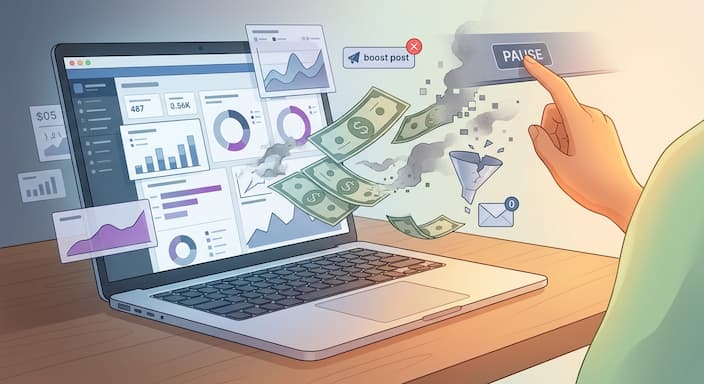
Should you run ads? Possibly, but not at the start, and not without a clear goal. As a solo operator, throwing $5 a day at Facebook to “see what happens” is usually a waste. Paid ads become powerful when you have a proven offer and a specific conversion goal (like signing up for your webinar or selling your digital guide).
A better first investment is often a small budget to boost your best-performing organic content. Did a LinkedIn post about a client result get great comments and profile views? Put $20 behind it to show it to a wider, targeted audience. You’re amplifying what’s already working, not guessing in the dark.
Your Weekly Marketing Hour
The biggest objection is time. So, block it. One 60-90 minute “Marketing Power Hour” each week is all you need to start. In that hour:
-
Batch create content: Write 3-4 social posts or record 2 short videos.
-
Schedule it: Use the free scheduler in Meta Business Suite or a tool like Later.
-
Engage: Spend 20 minutes genuinely replying to comments and messages from the past week.
-
Review: Glance at your analytics. What post resonated most? Do more of that.
This systematizes the chaos and protects the rest of your time for revenue-generating work.
Marketing as a solopreneur isn’t about fancy tricks or going viral. It’s the steady, strategic work of showing up as a helpful human in the right digital space. It’s about choosing focus over frenzy and relationships over reach. Start small. Pick your one channel. Document your journey this week. The clients you’re meant to serve are looking for exactly what you offer—you just have to be there, consistently, to be found.